
2026. What a world we live in...
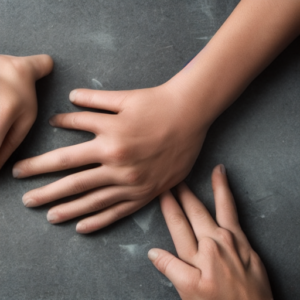
Four years ago images and videos made by AI had a weird warped effect and it just could not figure out how to make human hands.
To measure how far AI has come in such a short period of time, we only need to look at Will Smith and his apparent love of spaghetti.
Back then, I remember laughing at the state of the AI-generated images and the robotic tones of AI-generated voiceovers. But less than half a decade later, they threaten the very jobs and industry that millions of us have spent years learning and breaking into. We’re now at a point where a few words can generate a scene that would take a Studio Ghibli artist months, or years, to perfect.
Though, maybe “perfect” is the operative word here, as these “studio quality” videos that are churned out in offices and bedrooms across the world come at a cost:
- Time – Each generation takes a long time, anywhere between 5–10 minutes for premium customers, and hours for free users.
- Money – Credits are spent for every generation, and credits cost money, usually in the form of a monthly subscription, but top-ups are always available when the monthly allowance has been burned through (which happens quicker than you think).
- Quality – As impressive as these generations are to the layman, they’re still far from perfect and have a distinct AI quality to them.

Know thy enemy
But Pandora’s Box is open, so to speak. The technology is here and available to literally anybody who is willing to have a play.
So, that’s what I did.
As a creative, I chose to dive in and learn what AI had to offer, in a “know thy enemy” sort of way. That was, until I started having fun.
In March 2023 when I was first introduced to ChatGPT, I didn’t have much use for it. I had no idea the lengths it could go to help me with my animation projects in After Effects, so I did what anybody would do, and used it to make up stories about my friends and generate ridiculous images of us using descriptions only (image references weren’t a thing at this point).
With a couple of snippets of information, it churned out stories like “Graeme, the chocolate bourbon biscuit baron” and “Glenn, the tech-loving crime fighter known as Ama-Zone”. This was all exciting stuff, but the novelty wore off fast.
In August 2024 I was introduced to Suno, a song generation site that produces a fully-fledged song in your genre of choice with lyrics relating to your prompt. This was amazing! A full song with vocals, backing vocals, bass, guitar and drums in minutes!
As a budding musician who dabbles (at best) with the guitar and singing, this seemed like a cheat code for songwriting. Sure, it was obviously AI, but for someone with no songwriting talent, this gave you the basis for “writing” your own songs.
Later on, the world would start to see the rise in “AI Musicians”, with platforms becoming flooded with AI songs. But for me, much like with ChatGPT, I’d had my fun, added another string to my AI bow, and I was out.
Fast forward another year. Sora, Midjourney and Kling are all available to the public, and the quality in AI images has skyrocketed. Not to mention the ability to create 5–10 second video clips has landed, and those hands are getting awfully close to looking normal.
I started playing with AI to make mini horror videos. This is where AI had come into its own for me. It gave me the tools to make videos that I just would not be able to make without a hefty budget and the equipment to shoot it. All of a sudden, this was possible at my fingertips, and not just on the computer. On my phone.
I would spend hours in bed on my phone making generation after generation. Hour-long drives passed in minutes because of how hooked I was on generating the right image, then the right video and then stitching videos together to make them longer than the five or ten seconds available. But this was costing me money, and despite racking up views and followers on social media, once again, I lost the spark and was done.

Enter: Coursebusters
That was until October 2025, when our team at Learning Nexus were challenged to make a fun Halloween-themed promotional video about eLearning in groups of two or three.
This gave me an opportunity to put all I knew from each application into practice. Armed with a fantastic Ghostbusters-themed script from my colleague, Sami, I got to work finding the perfect movie trailer voice on ElevenLabs.
The brilliant thing about ElevenLabs, like most AI applications, is the availability. Cheap and even free subscriptions give people the chance to use professional-sounding voiceovers in seconds,
I used ChatGPT to generate prompts that would get the cleanest results for Kling AI both for image generation and video. With permission, I used images of my colleagues to generate Ghostbuster-esque characters with their faces. Then I finished it off by using Suno to overlay an epic 80s-style synthwave soundtrack about eLearning called Coursebusters – the title Sami and I came up with.
My favourite line:
“Set the dull. Shoot the dry. No bad lesson can survive. Light the spark. LIGHT THE FLAME! LEARNING’S NEVER GONNA BE THE SAAAAAAAME!”
Coursebusters was truly one of my favourite projects to work on, and even hearing the music now makes me want to sing it from the rooftops. But afterwards something didn’t sit right with me.
The only human aspects to my favourite project in a very long time were the script that Sami wrote, some plug-ins and templates I’d acquired from Envato, and, of course, my editing. It was truly brilliant that the project was achievable with such a low budget and short timeframe, but I didn’t feel like I could share it proudly like it was my own work.
And as a creative, the biggest drive you have is to be able to proudly showcase what you have made yourself. Whether it’s a book, a painting, an animation or a video, you can say: “I made this.”

The complicated bit
I think this moment is what sparked the beginning of my disillusionment with AI.
All the fun that I had had up to this point started to feel more like shame. I saw the same style of AI images and videos in every social media feed. I heard the AI voices that I use every day over the top of reels.
The term “AI slop” had never felt more relevant to me than at this moment. And it wasn't just the slop that started to unsettle me. It was seeing damaging real-world effects of AI, like destabilised public trust from disinformation, video footage becoming less and less trustworthy – seeing is no longer believing – and a technology that felt free costing the planet in ways most of us never see.
On top of this, the news became increasingly filled with more and more stories about the dark side of AI.
Social media generative AI chatbots used to make indecent images, deepfake scammers on video calls, voice-cloning scammers on phone calls, and huge-scale job losses.
As a father of two little girls, this frightened me. The chilling thought of what somebody out there could do with a single image of them.
As a husband to a not-so-tech-savvy wife, it frightened me. The stomach-churning thought of a sudden phone call from someone convincingly pretending to be literally anybody they want to be and getting sensitive information or finances handed over without batting an eyelid.
As a creative, this frightened me.
The heart-wrenching thought of having a career and an income to support my family one day, and the next being made completely and utterly redundant. For me, it was like the brakes were slammed on, and suddenly the fun was over.
But something clicked one day.
Just like with every other aspect of life that I want my family to be able to navigate successfully, I learn what I can about it and pass on my knowledge as a stepping stone for them to build their own knowledge on.
While I may take umbrage with a lot of factors relating to AI, I realise that it does more harm than good to shy away from it.
Like how I chose to learn AI as a creative in a “know thy enemy” sort of way, I can continue to use and learn about AI in the same way now as a father, husband and creative, to stay in the know and ahead of the curve.
So, yes, Pandora’s Box is open, but unlike the ancient Greek story of myth, has Hope really been left trapped in the box? I don’t think so. I have hope.
I hope that AI is a driving force for more human-based creativity. I hope that governments find a way to control and regulate the use of AI and the companies that create it. I hope that sooner rather than later, we hit a base level of “good enough” AI work making it into the industry that companies turn to having the unique selling point of: “We use humans.”
And more than anything…I hope that it’s not too late.
This may all sound very bleak, maybe even hypocritical, given what I’ve used AI for. But I’m not a complete nay-sayer. If anything, I’ve just become an advocate for regulation and am very much on board with slowing everything down before we pass a point of no return.
There is an endless list of things wrong with AI, but I’m not going to write that list out here. And I’m not writing this as a warning to people to stop using it, because I know that I won’t. I know that there are times that I find certain AI applications genuinely useful, so it would be sanctimonious of me to urge others not to.
Here’s the kicker. I even used AI to help me with this post. I used Claude as a dictaphone to get all of my thoughts down. I got it to arrange them into coherent points which I then used as a reference to write this. And I used it to proofread the final draft.
So instead, let me end with a different list, one more akin to the poem read by Julia Stiles in 10 Things I Hate About You. But with 11 things, because I like to go one step beyond:
- I hate that you make “good enough” so easy to reach that “good” starts to feel optional.
- I hate how you've made my industry seem “easy” and attainable, pitting twenty years of industry experience against a prompt.
- I hate that you learned from work you never asked permission to learn from.
- I hate that you've turned “Is this AI?” into a question people now have to genuinely ask.
- I hate that when I'm stuck, you're right there, and leaning on you feels like cheating, because it was the struggle that used to teach me something.
- I hate that some of what you make is actually good, and I hate that this bothers me as much as it does.
- I hate that you're a tool I still reach for, because hating you and finding you useful aren't mutually exclusive, and that contradiction is exhausting.
- I hate that you'll never doubt yourself creatively, the way I do.
- I hate that despite all the waffle, you give me something to bounce my ideas off, making me more efficient, and I don't hate that as much as I want to.
- I hate that you make me consider the worth of something “made by a human”, but regardless of its quality, I’m proud when it is.
- I hate that, despite my growing stance that AI should be shut down, I don't actually hate you, not even close, not even a little bit, not even at all. (Well, maybe a little bit).
And if you’ve somehow made it all the way to the end of this blog and you’re still thinking…
“But Aaron, is Coursebusters really that good?”
Well, yes. Yes it is. But don’t just take my word for it.
Check out Coursebusters for yourself below: